Why emotional intelligence is a superpower for ambitious women


Reading time: 4.53 minutes
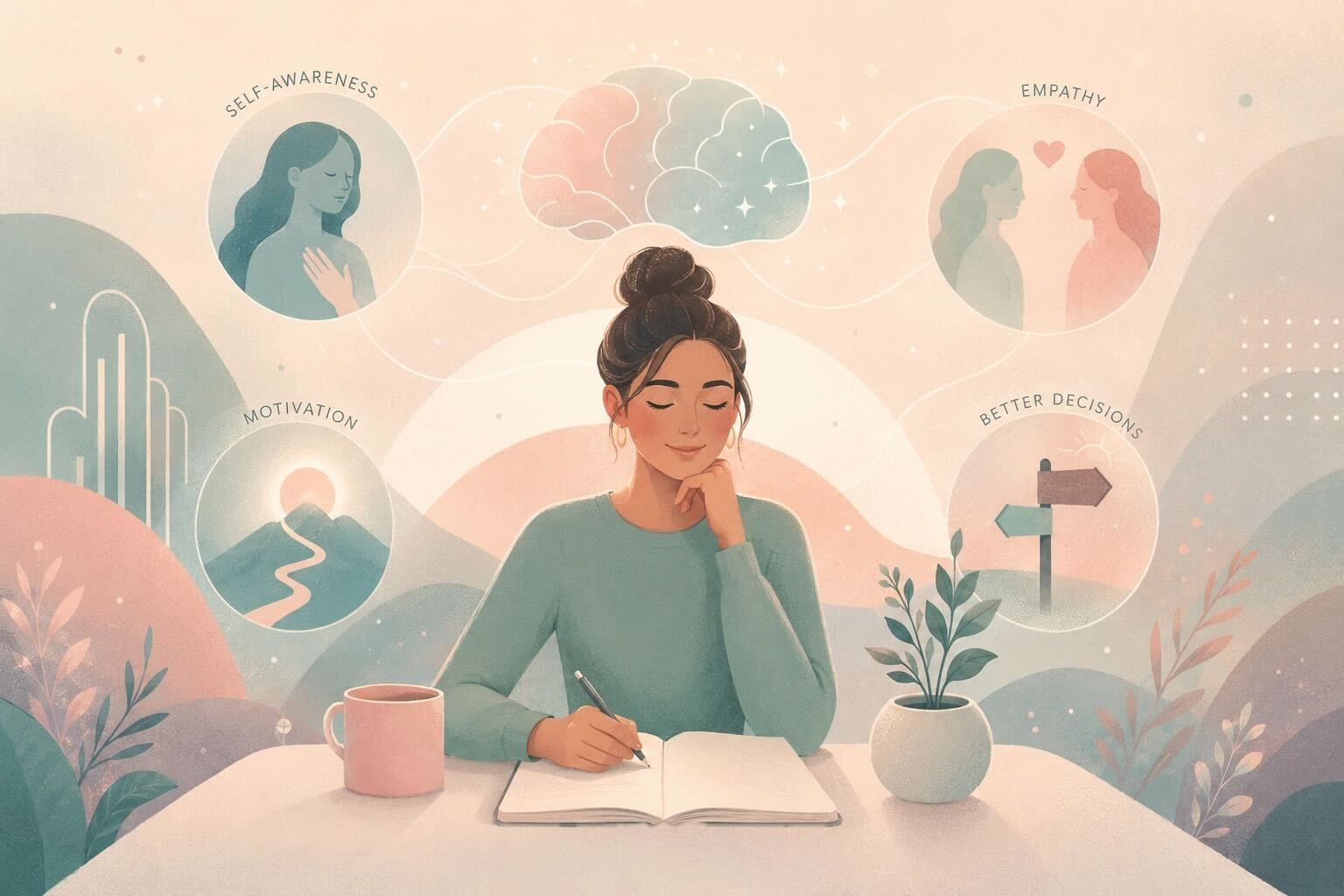
This isn’t easy to hear, but success alone doesn’t always lead to confidence, calm, or fulfilment.
Many ambitious women know how to perform, achieve, and push through challenges. But underneath the productivity and external success, there can still be stress, emotional overwhelm, people-pleasing, or difficulty switching off.
That’s where emotional intelligence comes in.
Research suggests emotional intelligence (EQ) plays a major role in resilience, leadership, communication, and emotional wellbeing. In other words, your ability to understand and manage emotions may matter just as much as your qualifications or experience.
And the good news? Emotional intelligence is a skill you can strengthen over time.
What is emotional intelligence?
Emotional intelligence is the ability to recognise, understand, and manage your emotions while also being aware of the emotions of others.
It’s made up of skills like:
- self-awareness
- emotional regulation
- empathy
- motivation
- and healthy communication
When these skills strengthen, life tends to feel less reactive and more intentional.
Why emotional intelligence matters for ambitious women
Ambition can be powerful, but without emotional awareness, it can also lead to burnout, perfectionism, or constantly feeling like you need to prove yourself.
Emotional intelligence helps create a healthier, more sustainable version of success.
It strengthens relationships
Whether at work or in your personal life, emotional intelligence helps you communicate more clearly and connect more deeply.
When you understand your own emotions, you’re less likely to react impulsively or misunderstand others. And when you can empathise with people, relationships tend to feel more supportive and emotionally safe.
Self-awareness is a skill that strengthens with practice. Inside the selfsquared app, we use guided journaling and reflection tools to help you better understand your emotional patterns and reactions.
It helps you handle stress more effectively
Life moves fast, especially for women balancing careers, expectations, relationships, and personal growth.
Without emotional regulation, stress can quickly build into emotional exhaustion.
But emotional intelligence creates space between what you feel and how you respond.
Instead of spiralling after setbacks, emotionally intelligent people are more likely to:
- pause before reacting
- communicate their needs clearly
- reframe challenges
- and recover more effectively from stress
Here’s the science:
Research suggests emotional intelligence is closely linked to nervous system regulation; your ability to stay calm and responsive under pressure instead of reactive and overwhelmed.
If you’re navigating burnout, overwhelm, or constant pressure, our selfsquared group workshops help you build emotional resilience in a practical, supportive environment.
It improves confidence and decision-making
Many women believe confidence comes from achievement alone.
But real confidence often comes from emotional security; trusting yourself enough to navigate discomfort, uncertainty, and challenges without losing your sense of self.
High emotional intelligence can improve:
- boundary-setting
- communication
- leadership presence
- self-trust
- and decision-making under pressure
Because emotions influence decisions more than we often realise. Emotional intelligence helps you respond intentionally instead of reacting impulsively.
Sometimes the hardest part is recognising your own blind spots. Our 1:1 coaching sessions at selfsquared are designed to help ambitious women build clarity, confidence, and emotional awareness in both work and life.
3 simple ways to strengthen your emotional intelligence
The good news? Emotional intelligence isn’t fixed.
Thanks to neuroplasticity (the brain’s ability to adapt and change) emotional awareness and regulation can improve with practice.
1. Pause before reacting
Creating even a few seconds of pause between emotion and response can completely change how you communicate.
Ask yourself:
- What am I actually feeling right now?
- What triggered this reaction?
- What response would feel aligned instead of impulsive?
2. Name your emotions clearly
Research suggests naming emotions can reduce their intensity.
Instead of saying:
“I’m stressed.”
Try identifying the emotion more specifically:
- overwhelmed
- anxious
- frustrated
- emotionally drained
Clarity creates self-awareness, and self-awareness creates choice.
3. Reflect on your emotional patterns
Notice:
- what drains your energy
- what helps you feel grounded
- which environments increase stress
- and where you feel emotionally safe
Inside the selfsquared app, daily reflection prompts help you build emotional awareness in small, manageable steps; because lasting behaviour change starts with understanding yourself better.
To conclude
Emotional intelligence is about understanding yourself well enough to respond intentionally instead of automatically. And for ambitious women, that skill becomes a superpower. Because success without emotional wellbeing can quickly become exhausting.
If you want support building emotional resilience and self-awareness, explore the selfsquared app, join an upcoming group workshop, or book a 1:1 coaching session designed to help you feel more grounded, confident, and emotionally aligned.
---
Frequently asked questions
What is emotional intelligence?
Emotional intelligence is the ability to recognise, understand, and manage emotions; both your own and other people’s.
Why is emotional intelligence important at work?
High emotional intelligence improves communication, resilience, leadership, teamwork, and decision-making under pressure.
Can emotional intelligence be improved?
Yes. Research suggests emotional intelligence can strengthen over time through self-awareness, reflection, and emotional regulation practices.